Weekly · World Stock Push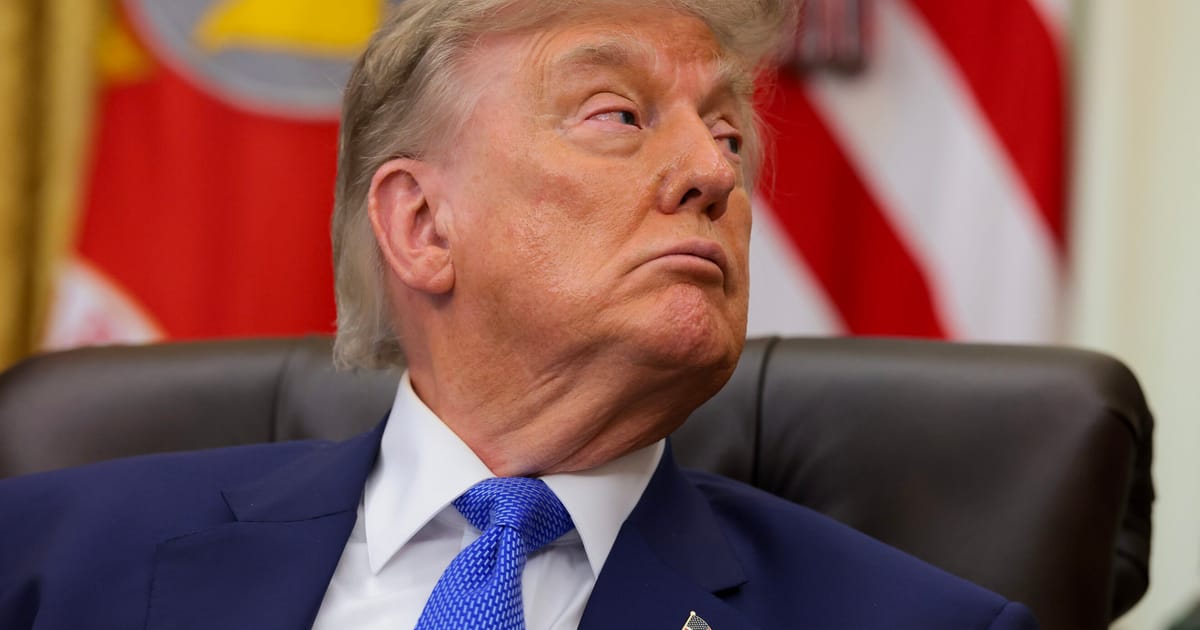
News Energy and Climate BRUSSELS — European authorities have downplayed threats that the United States could temporarily ban all exports of U.S. diesel, despite warnings that such a ban would have "very serious" consequences for the continent's energy supply. On Wednesday POLITICO reported the White House was preparing a 90-day ban on exports of diesel, a move that would blow a huge hole in Europe's supply of the fuel that's used in heavy transport and industry. The ban puts U.S.
President Donald Trump at odds with industry and some in his own circle, including Energy Secretary Chris Wright who opposes the ban. Last month, the U.S. supplied 420,000 barrels of diesel to EU member countries and the U.K., accounting for more than half of total imports that month, according to Kpler. Europe's reliance on the U.S. for diesel has increased in recent months after the closure of the Strait of Hormuz sent imports from Qatar, Kuwait, Oman and the United Arab Emirates plummeting.
“Given the precarious situation that Europe currently finds itself in, any further restrictions on fuels available to the EU at this stage could quickly become very serious,” said a person in the industry who closely follows the market situation and was granted anonymity to discuss the sensitive situation openly. “Diesel inventories in particular are under pressure, and the EU has become increasingly reliant on supplies from the U.S. as it’s had to diversify first from Russia and then from the Middle East. Beyond this, Europe currently has few limited, easy replacement options.” But European officials either downplayed the risk, said it was unlikely to happen, or weren’t even aware of the threat.
Czech trade minister Karel Havlíček said he believed the ban “will not actually materialize, given the potential negative indirect impact on world markets. Therefore I welcome the latest statements of U.S. Energy Secretary Wright.” Wright on Wednesday said the "blunt tool of banning diesel exports definitely doesn’t work." Havlíček added that direct U.S. diesel exports to the Czech Republic were “insignificant.” A German government spokesperson declined to comment on the specific U.S. threat of a ban on Wednesday, saying that Berlin was “doing everything it can to maintain security of supply, as it always has done in the past; this also applies to refineries that are operating at good capacity utilization.” Germany last month imported 30,000 barrels of diesel from the U.S., according to Kpler.
This year U.S. imports have so far accounted for about 18% of Germany’s imports, according to industry association en2x. The United Kingdom, the biggest importer of American diesel in Europe at 108,000 barrels last month according to Kpler, had a similar official line to Germany. “Forecourts in the U.K. are being supplied with petrol and diesel as normal and we have a diverse and resilient supply,” a U.K. government spokesperson said.
But one British lawmaker wasn’t so sanguine. “If the U.S. restricts our supply of diesel it would be a big concern for drivers,” said Bill Esterson, a U.K. Labour MP and chair of the House of Commons Energy Security and Net Zero Committee.
“Prices are already sky high because of the war in Iran.” France, which imported 42,000 barrels last month, did not respond to a request for comment. The European Commission also declined to comment. Multiple other European officials, granted anonymity to discuss Trump's threats openly, downplayed the threat.
Since the war in Iran began, diesel imports from Qatar have completely dried up, according to the Kpler figures. Imports from Kuwait, Oman and the United Arab Emirates also fell to zero for a while, though they have picked up again in the last couple of months. Still, they are nowhere near U.S. levels.
Aude Le Gentil and Nicholas Earl contributed reporting.
Source: politico.eu