Weekly · World Stock Push
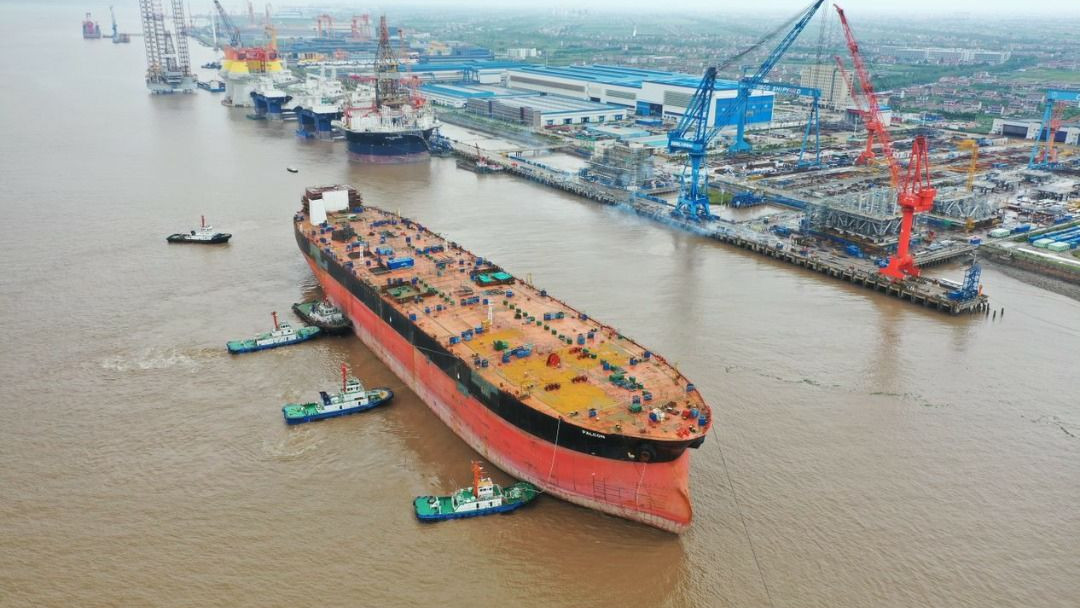
Home Energy Crude Oil By Natalia Katona - Oct 18, 2026, 6:00 PM CDT Soaring freight is forcing oil producers into discounts, pushing delivered prices towards $140/bbl in China and prompting producers to absorb more transport costs to secure buyers. India is attracting more Brazilian and West African barrels as shorter voyages improve sellers’ returns, while Chinese refiners hold out for cheaper deliveries. War-risk premiums and mounting delays are strengthening demand for crude that avoids the Middle East’s troubled shipping routes.
Freight is reshaping global oil trade and the prices producers can command for their crude. Soaring shipping costs are pushing delivered prices beyond what refiners are willing to pay, forcing sellers to cut differentials or find buyers closer to home. With Chinese refiners inclined to wait for transport costs to ease, some producers are committing barrels for future loading at prices that leave little room for today’s freight bill.
Their returns increasingly depend on shipping becoming cheaper before those cargoes sail. The pressure is most pronounced in the Middle East, where crude freight has surged in two waves since the war began in March. VLCC rates from the Gulf to China initially jumped from around $4/bbl to $17/bbl, before easing to $11–12/bbl through April–July.
The expiry of the US-Iran ceasefire in August triggered another steep increase, taking freight to $33/bbl by late September and pushing current landed costs from the Middle Eastern Gulf to around $140/bbl in China. For Japan and South Korean freight, lifted landed costs were even higher, to around $145/bbl. Alternative loading points have offered uneven relief.
Freight from Saudi Arabia’s Yanbu terminal to China trended within the $6–7/bbl bandwidth after the initial wartime spike, but Houthi restrictions on Saudi cargoes through Bab el-Mandeb drove it to $28/bbl by mid-October, bringing landed costs to around$140/bbl. Saudi loadings at Yanbu have since slowed down to 1.6-1.8 million b/d (half the March-July average) following intensified Houthi attacks on energy infrastructure along the Red Sea coast, with the Gulf handling the bulk of exports. That has put Aramco under intense pressure to absorb part of the cost of moving barrels through Hormuz.
The November OSP for Saudi Aramco’s flagship Arab Light grade has been set at a $5/bbl discount to Oman/Dubai, helping at least partially offset the $10–15/bbl cost of shipping them outside the strait. However, very few Asian refiners feel inclined to charter their own vessels and send them to the Gulf to load. From Sohar, where most of Saudi Aramco’s STS transactions take place, Saudi barrels are being sold on a spot basis rather than through official selling prices, at reported Dubai plus $5/bbl.
Yet onward freight still pushes their landed cost in China above $130/bbl, exceeding what Chinese refiners are willing to pay. However, Saudi sellers still need to move oil, while Chinese refiners have an incentive to wait till the shipping costs decrease. So, Aramco’s strategy is to fix a differential now for loading roughly two months later, this way securing a buyer, but leaving the eventual netback exposed to freight.
Persistently high rates could limit or even erase the seller’s margin, potentially leaving a netback that’s below its nominal OSP price. That said, in case shipping costs decrease in future, the same differential could make the deal attractive in the end. The use of tankers owned by Saudi Arabia’s national shipping company Bahri (in which Aramco holds a 20% stake) illustrates how producers can cushion that exposure by retaining part of the shipping income within an affiliated business.
Freight still needs to be charged at market rates, but some of the pressure on crude sales at least can be offset by shipping earnings. By September, the freight surge had spread beyond the Middle East. Brazil-China VLCC freight reached around $36/bbl by mid-October, taking landed Tupi prices to roughly $140/bbl, even FOB netbacks for Petrobras and other Brazilian producers continue to indicate single-digit discounts to ICE Brent.
With Chinese buyers seeking delivered prices closer to $130/bbl, Brazilian offers into China have notably slowed down in recent weeks, making India a more attractive destination for Brazilian sellers. West African producers face the same pressure . Djeno is trading at a FOB discount of around $10/bbl to ICE Brent, but VLCC freight from West Africa to China costs roughly $34/bbl – $9/bbl more than shipping to India.
That advantage is redirecting cargoes historically dedicated to Chinese buyers towards Indian refiners. Even now, the change of patterns is visible in current loadings: India’s imports from Angola are estimated to rise from 35,000 b/d in September to 315,000 b/d in October, with additional cargoes from Gabon and Congo also on their way to India’s West Coast. These shifts show why deeper crude discounts no longer guarantee competitive delivered prices.
Producers that price against Dated Brent, which reflects the North Sea’s (extremely tight) physical crude market, are cutting FOB differentials to accommodate higher shipping costs; however, the same grades appear to have double-digit premia when compared against other benchmarks. Russia’s deliveries of Urals to India have been generally linked to Dated Brent – as Dated is now almost $20 per barrel above ICE Brent, Russian suppliers need to reflect these changing pricing dynamics. Thus, Urals was assessed at a +$8/bbl premium to Dated a month ago; by now, it is essentially trading Dated flat, with further downside looming down the road.
However, freight comparisons alone do not capture the full expense of buying crude in today’s wildly disrupted markets. Loading reliability has become another factor in Asian purchasing decisions. STS transfers outside Hormuz are routinely delayed, particularly in recent days as Iranian drone strikes have intensified to unprecedented levels.
Demurrage rates for cargoes moving out of the Gulf have soared to $1 million/day, equivalent to about $0.50/bbl for a fully laden VLCC for each day of delay. War-risk premiums have climbed to 7–8% of hull and machinery value (roughly $9–10 million, or $4–5/bbl), for an average VLCC. Those additional costs strengthen the appeal of Latin American barrels, whose routes to Asia avoid the restricted waterways that affect Gulf exports.
Their loading schedules also offer an advantage over US supplies exposed to hurricane and fog disruptions. Avoiding Gulf-related war-risk premiums and prolonged demurrage can save refiners millions of dollars beyond the costs routinely captured in standard arbitrage calculations. The result is a gradual redistribution of trade, according to both transport costs and delivery certainty.
India is about to absorb more Latin American and West African crude because shipping those barrels to its coast costs less than carrying them onward to China. Chinese buyers, meanwhile, are likely to remain focused on Russian and Saudi oil, and even Canadian heavy sour supplies from Vancouver. That said, Canadian TMX exports – delivered on smaller Aframax tankers due to shallow waters in and around the Westridge terminal – have seen their freight rate spiral up to $30/bbl this week, suggesting there’s virtually no difference between chartering Aframax, Suezmax or VLCC tankers, freight is exorbitantly expensive on all of those options.
The premium on predictable arrivals is particularly evident in Russia’s ESPO trade, a staple of Chinese refining. Elbowing their way past oil-deprived Shandong independents, Chinese state-owned companies had already bought all November-loading ESPO cargoes by early September, clearing the schedule much earlier than usual. This goes on to show that record-high freight is reconfiguring the way Asia traded historically – refiners buying up all short-haul voyages and taking their time with long-haul ones, forgoing term purchases and instead relying on Middle Eastern suppliers to deliver spot cargoes, looking towards West Africa and Latin America to optimize their slates.
After all, for refiners, the most attractive barrel is increasingly the one whose final cost (and arrival date) they can trust. By Natalia Katona for Oilprice.com More Top Reads From Oilprice.com Data Centers Drive Surge in India’s Renewable Power Demand Iran War Set to Push PetroChina’s Trading Profit to Record $3 Billion Global Gas Crunch Makes Europe’s Remaining Coal Plants Profitable Download The Free Oilprice App Today Back to homepage Natalia Katona Natalia Katona is a freelance commodity analyst, based in the United Arab Emirates. More Info Leave a comment EXXON Mobil -0.35 Open 57.81 Trading Vol. 6.96M Previous Vol. 241.7B BUY 57.15 Sell 57.00